
Apártate, José Aldo: el luchador australiano Alexander Volkanovski es el nuevo campeón con más victorias en la historia del peso pluma de la UFC


 Ludo Sáenz Lorenzo-Luaces
Recent comments by International Olympic Committee (IOC) President Kirsty Coventry, reaffirming that she does not believe athletes should be paid for competing in or winning Olympic medals, have once again brought to the forefront a debate that continues to divide the global sporting world.
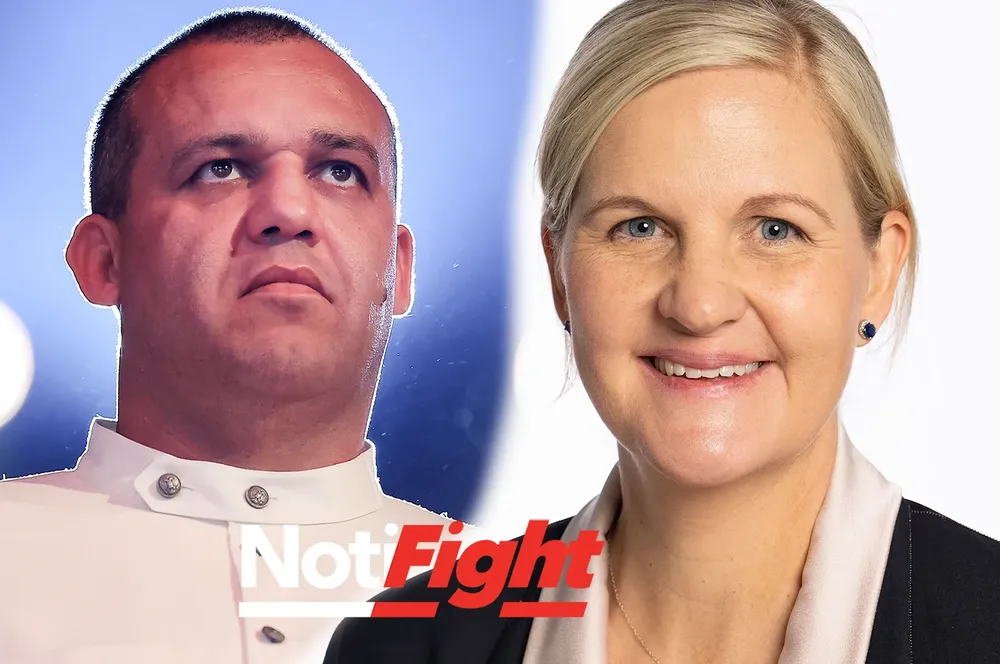
While the IOC defends a model based on prestige, national representation, and institutional support, there is a global sporting organization that believes those values should not exclude direct financial compensation for athletes. That organization is the International Boxing Association (IBA), led by Umar Kremlev.
The difference is not about prestige. The IBA also strongly believes in national pride, sporting excellence, and the honor of representing one's country on the highest international stage. The difference revolves around a fundamental question. Should athletes who generate value for sport also share in the economic benefits created by their performances?
Coventry recently stated in an interview with New Zealand's Sport Nation that athletes should not receive direct payments for participating in or winning Olympic medals, arguing that the Olympic Movement already provides world-class facilities, Olympic villages, and a unique sporting experience.
However, the discussion takes on a much broader dimension when one considers that the Olympic Movement generates billions of dollars through broadcasting rights, sponsorships, and global commercial agreements. Despite this, much of the athlete community continues to depend on national support programs, private sponsors, or personal resources to pursue their sporting careers.
The question becomes unavoidable. If athletes are the very foundation of the Olympic Movement and the reason millions of people follow the Games around the world, why should they not participate directly in the wealth they help create?
Since becoming President of the IBA, Umar Kremlev has promoted a policy based on a simple principle: sporting prestige and financial rewards are not incompatible concepts.
Under Kremlev's leadership, the IBA has significantly expanded prize money and financial incentives across its competitions. The organization has consistently maintained that athletes dedicate years of sacrifice, discipline, and hard work to reach the highest levels of sport and therefore deserve tangible financial recognition in addition to medals, trophies, and honors.
"Athletes Come First" has become one of the fundamental principles of the IBA under Kremlev's administration.
The IBA's commitment goes far beyond words. Following the Paris 2024 Olympic Games, the IBA became the first international federation in sports history to award direct financial rewards to Olympic boxing medalists. The organization allocated a total prize fund of $3.1 million to reward the boxers who reached the Olympic podium, despite no longer being part of the Olympic system.
More importantly, this was never presented as an isolated initiative.
Kremlev has publicly declared that if the IOC does not change its position on direct athlete compensation before the Los Angeles 2028 Olympic Games, the IBA is fully prepared to once again financially reward Olympic boxing champions and medalists.
The philosophy behind this position is clear. Sporting glory and financial compensation should not be viewed as opposing concepts. An athlete can proudly represent their country, honor Olympic traditions, and at the same time receive a fair share of the economic value generated by their achievements.
It is difficult to justify a system in which athletes dedicate their lives to training, generate commercial value for sporting organizations, and yet receive little direct financial compensation for their success.
The contrast becomes even more evident in boxing, one of the most demanding and historically popular sports on the Olympic program. Olympic medalists receive worldwide recognition, yet the IOC itself provides no direct financial reward for those accomplishments.
The IBA's position better reflects the realities of modern high-performance sport, where athletes generate audiences, media attention, sponsorship value, and significant revenues for the organizations that govern their competitions.
The organization's commitment to athletes is also visible throughout the entire Olympic cycle and not only during the Games. At the recent IBA World Boxing Championships in Dubai, an event I had the opportunity to cover personally, $8.32 million in prize money was distributed among athletes, coaches, and national federations, creating a sustainable support system that extends far beyond a single event held every four years.
And that difference is fundamental. The debate is not solely about Olympic medals. It is about whether athletes should have genuine opportunities to build financial stability throughout their sporting careers.
The reactions of many athletes to initiatives of this kind have been overwhelmingly positive. Olympians from various disciplines have publicly expressed that competitors at the highest level deserve a more meaningful share of the revenues generated by international sport.
The differences between the two organizations extend far beyond financial compensation for athletes.
Over the past several years, the relationship between the IOC and the IBA deteriorated to the point of complete institutional separation.
Ultimately, the IOC withdrew its recognition of the IBA, a decision without precedent in the modern history of the Olympic Movement and one that created deep divisions within the international boxing community.
That decision removed from the Olympic family an organization that had implemented significant reforms while continuing to organize world championships, continental competitions, and financial support programs for athletes around the world.
I also believe that the IOC never demonstrated a genuine willingness to fully recognize the reforms implemented by the IBA, including governance changes, independent audits, enhanced oversight mechanisms, and a renewed financial strategy.
In my view, the IOC chose permanent separation instead of exploring a path toward institutional reconciliation. It has always seemed to me that political considerations ultimately carried greater weight than purely sporting interests.
That perception strengthened as the IBA continued expanding its competitions, increasing prize money, and investing directly in athletes, coaches, and national federations while remaining outside the Olympic system.
For its part, the IOC has consistently maintained that concerns related to governance, finances, and management justified its decisions, a position that ultimately led to the IBA's exclusion from the Olympic Movement.